

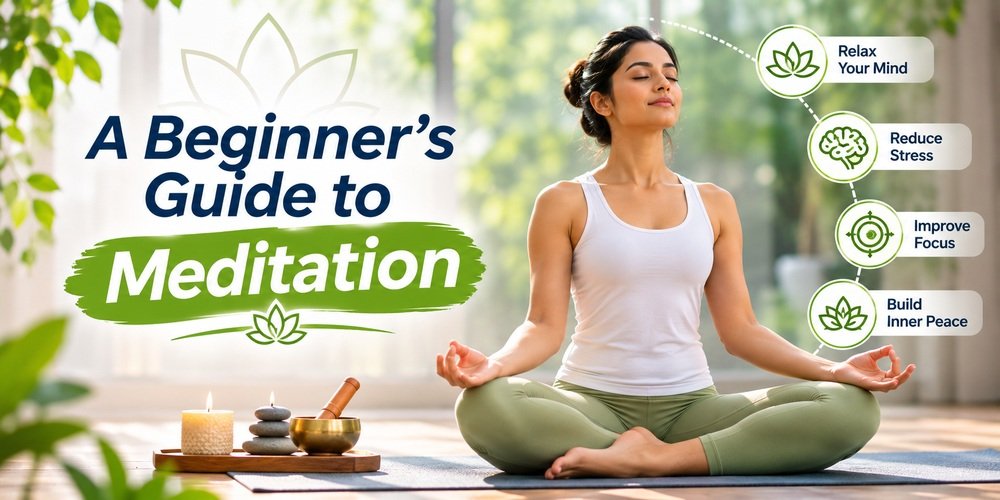
What meditation actually is
Sit still. Pick one thing to pay attention to, usually your breath. Notice when your mind has wandered off somewhere else. Bring it back. Do that again. And again. For a few minutes.
The coming-back part is the practice, not the stillness. If you noticed your mind wandering fifty times in five minutes, you practised fifty times. That is a win.
What it is not
It is not thinking about nothing. It is not sitting cross-legged for an hour. It is not a religion. It is not something you are either good at or bad at. It is just training your attention, the way you might train any other part of the body.
Why bother
A few things most people notice within a couple of weeks. Faster recovery from stress, which means not fewer stressors but less time stuck in them. A small gap between a trigger and a reaction, enough to choose a better response. Better sleep, especially if the mind usually runs loops at night. Easier focus during the day, because you have been asking the mind to stay in one place for practice.
None of this is magic. It is what happens when you spend a little time each day not reacting.
A simple starting practice
You do not need a cushion, an app, incense, or a quiet room. You need five minutes and a timer.
Sit in a way you can hold for five minutes. A chair is fine. Keep your spine long and your shoulders soft.
Set a timer for five minutes. Close your eyes, or lower your gaze.
Take a few slow breaths to settle in:
- Sit tall and relax your shoulders.
- Inhale slowly and lengthen your spine.
- Exhale and let any tension drop.
- Repeat for five to eight calm breaths.
Now let your breath find its own rhythm. Do not control it. Just watch it. Feel the air coming in. Feel the air going out.
When your mind drifts, and it will, notice where it went. Then come back to the breath. No lecture. No judgement. Just return.
When the timer goes off, sit for one more breath. Then open your eyes.
That is the whole practice. Five minutes a day. Twice if you can manage it.
Things that will probably happen
Your mind will go wild. This is normal. Meditation did not make it busier. You just noticed how busy it already was.
You will get itchy and restless. Try not to scratch or shift for the first few sessions. The urge usually passes. If it does not, move slowly, settle again, and carry on.
You will fall asleep sometimes. Usually a sign that you need more rest. Not a reason to stop.
You will doubt it is working. Change in meditation is quiet. It shows up as you not snapping at your partner, not as fireworks on the cushion.
How to make it stick
- Pick a time. Right after waking, before a shower, after your first glass of water. Attach it to something you already do.
- Keep it short. Five minutes every day beats twenty minutes once a week.
- Sit in the same spot. Your brain learns the chair.
- Do not grade the session. There are no bad meditations. Only sessions where you showed up or did not.
- Give it three weeks before you decide anything.
When to go deeper
Once five minutes feels easy, add a few more. Try ten. Then explore longer forms: body scans, loving-kindness practice, guided tracks, mantra, silent sitting. There is a wide world here. Start where you are and let curiosity move you.
Want someone to sit with?
Yogability offers guided meditation sessions alongside yoga therapy, in small groups and one-on-one. Kiran can help you build a daily practice that fits a Canadian morning, a Canadian commute, and a mind that was not built to go quiet on command.